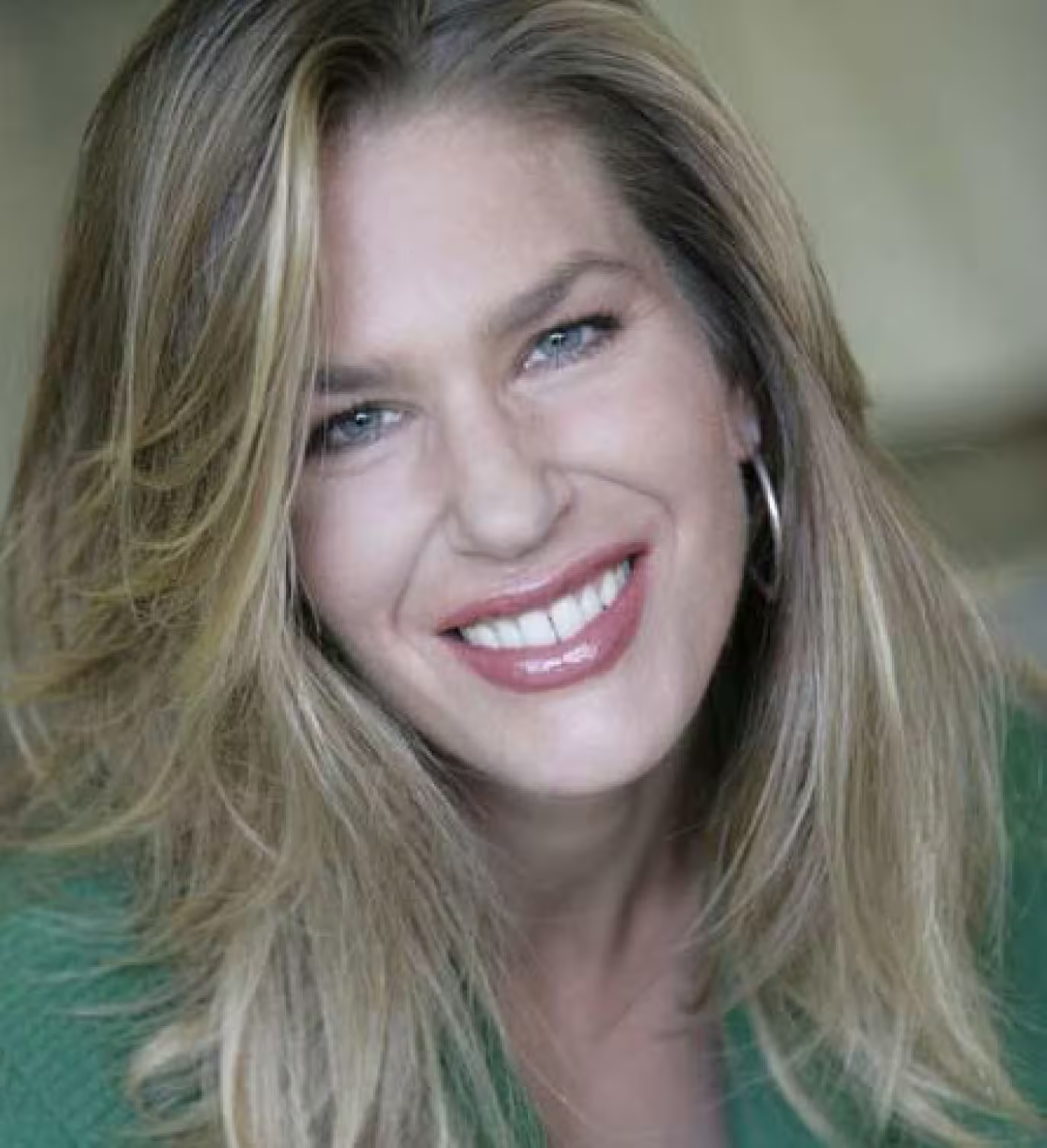
April  Wright
(ABOUT APRIL)

April brings extensive experience 
in supporting internal and external transformation. Her work includes counseling for LGBTQIA+, at-risk youth, individuals, couples, and families.

A passionate advocate for wellness, April is an avid exercise enthusiast who embraces a healthy, balanced lifestyle. Her commitment to physical activity and time spent outdoors has helped her remain grounded, centered, and resilient. April’s dedication to human health began in college where she majored in dietetics and studied how to properly nourish the body. Alongside her education in nutrition and physical fitness, she pursued studies in psychology and philosophy to strengthen her intellectual and emotional well-being. This integrative approach to mind-body connection has shaped her uncommon sense of maturity, serenity, and capacity to support others on their journeys

My story

(MY JOURNEY)

My path to healing and growth

My journey to becoming a therapist and artist has been deeply influenced by both personal experiences and formal education. In my early years, I often found myself trapped in unhealthy relationship patterns that felt familiar, even though they were damaging. Reaching rock bottom marked a pivotal moment for me, pushing me to face my self-destructive habits and gain insight into the relational dynamics that fueled them, ultimately transforming my perspective on life and personal growth.
I began my academic journey by earning a Bachelor of Science in Dietetics, which provided me with a solid foundation in whole-body wellness and nutrition. This academic path naturally aligned with my lifelong connection to movement, nature, and creativity. In my thirties, driven by my own healing process and a deep desire to support others, I decided to return to graduate school. There, I earned a Master of Arts in Psychology.
During my training, I worked with at-risk youth and volunteered on a suicide prevention hotline for adolescents, strengthening my capacity to sit with crisis and developmental trauma. After licensure, I pursued advanced training in EMDR, Couples Counseling, and Human Sexuality. My clinical work has included trauma-focused group therapy, workers’ compensation cases, relational communication groups, and culturally sensitive work around sex and marriage.
As an Expressive Arts Psychotherapist, I integrate attachment theory, neuroscience, EMDR, and relational approaches with art, movement, and mindfulness. I help navigate trauma, performance anxiety, and relational challenges — helping them move from feeling stuck or overwhelmed toward greater authenticity and resilience.
I believe healing is both courageous and transformative. When we approach our stories with honesty and compassion, we open the door to more empowered ways of being.

My journey to becoming a therapist and artist has been deeply influenced by both personal experiences and formal education. In my early years, I often found myself trapped in unhealthy relationship patterns that felt familiar, even though they were damaging. Reaching rock bottom marked a pivotal moment for me, pushing me to face my self-destructive habits and gain insight into the relational dynamics that fueled them, ultimately transforming my perspective on life and personal growth.

I began my academic journey by earning a Bachelor of Science in Dietetics, which provided me with a solid foundation in whole-body wellness and nutrition. This academic path naturally aligned with my lifelong connection to movement, nature, and creativity. In my thirties, driven by my own healing process and a deep desire to support others, I decided to return to graduate school. There, I earned a Master of Arts in Psychology.

During my training, I worked with at-risk youth and volunteered on a suicide prevention hotline for adolescents, strengthening my capacity to sit with crisis and developmental trauma. After licensure, I pursued advanced training in EMDR, Couples Counseling, and Human Sexuality. My clinical work has included trauma-focused group therapy, workers’ compensation cases, relational communication groups, and culturally sensitive work around sex and marriage.

As an Expressive Arts Psychotherapist, I integrate attachment theory, neuroscience, EMDR, and relational approaches with art, movement, and mindfulness. I help navigate trauma, performance anxiety, and relational challenges — helping them move from feeling stuck or overwhelmed toward greater authenticity and resilience. I believe healing is both courageous and transformative. When we approach our stories with honesty and compassion, we open the door to more empowered ways of being.

My journey to becoming a therapist and artist has been deeply influenced by both personal experiences and formal education. In my early years, I often found myself trapped in unhealthy relationship patterns that felt familiar, even though they were damaging. Reaching rock bottom marked a pivotal moment for me, pushing me to face my self-destructive habits and gain insight into the relational dynamics that fueled them, ultimately transforming my perspective on life and personal growth.

My journey to becoming a therapist and artist has been deeply influenced by both personal experiences and formal education. In my early years, I often found myself trapped in unhealthy relationship patterns that felt familiar, even though they were damaging. Reaching rock bottom marked a pivotal moment for me, pushing me to face my self-destructive habits and gain insight into the relational dynamics that fueled them, ultimately transforming my perspective on life and personal growth.

I began my academic journey by earning a Bachelor of Science in Dietetics, which provided me with a solid foundation in whole-body wellness and nutrition. This academic path naturally aligned with my lifelong connection to movement, nature, and creativity. In my thirties, driven by my own healing process and a deep desire to support others, I decided to return to graduate school. There, I earned a Master of Arts in Psychology.

I began my academic journey by earning a Bachelor of Science in Dietetics, which provided me with a solid foundation in whole-body wellness and nutrition. This academic path naturally aligned with my lifelong connection to movement, nature, and creativity. In my thirties, driven by my own healing process and a deep desire to support others, I decided to return to graduate school. There, I earned a Master of Arts in Psychology.

During my training, I worked with at-risk youth and volunteered on a suicide prevention hotline for adolescents, strengthening my capacity to sit with crisis and developmental trauma. After licensure, I pursued advanced training in EMDR, Couples Counseling, and Human Sexuality. My clinical work has included trauma-focused group therapy, workers’ compensation cases, relational communication groups, and culturally sensitive work around sex and marriage.

During my training, I worked with at-risk youth and volunteered on a suicide prevention hotline for adolescents, strengthening my capacity to sit with crisis and developmental trauma. After licensure, I pursued advanced training in EMDR, Couples Counseling, and Human Sexuality. My clinical work has included trauma-focused group therapy, workers’ compensation cases, relational communication groups, and culturally sensitive work around sex and marriage.

As an Expressive Arts Psychotherapist, I integrate attachment theory, neuroscience, EMDR, and relational approaches with art, movement, and mindfulness. I help navigate trauma, performance anxiety, and relational challenges — helping them move from feeling stuck or overwhelmed toward greater authenticity and resilience.
I believe healing is both courageous and transformative. When we approach our stories with honesty and compassion, we open the door to more empowered ways of being.

As an Expressive Arts Psychotherapist, I integrate attachment theory, neuroscience, EMDR, and relational approaches with art, movement, and mindfulness. I help navigate trauma, performance anxiety, and relational challenges — helping them move from feeling stuck or overwhelmed toward greater authenticity and resilience. I believe healing is both courageous and transformative. When we approach our stories with honesty and compassion, we open the door to more empowered ways of being.

(MY VALUES)

What I  firmly stand by

Trauma-Informed Healing

Trauma-Informed Healing
01

Healing past wounds while addressing anxiety, depression, and negative self-image with care and awareness.

Non-Judgmental Presence

Non-Judgmental Presence
02

Creating a safe and compassionate space where clients feel accepted, respected, and free to explore their experiences.

Self-compassion

Self-compassion
03

Creating a safe and compassionate space where clients feel accepted, respected, and free to explore their experiences.

(THE PROCESS)

How do we begin

01
April  Wright

Meeting with April for 
the first time

Through individual therapy, April supports personal growth, clarity, and meaningful life change

02
Deepening awareness & direction for ongoing growth

Deepening awareness & direction for ongoing growth

Together, we explore patterns, emotions, and life experiences to build insight and clarity. Sessions are collaborative and paced intentionally, helping you develop tools, self-understanding, and confidence to navigate challenges with greater ease.
03
Meaningful change for lasting transformation

Meaningful change for lasting transformation

This phase supports sustainable change—strengthening resilience, self-trust, and alignment —so growth continues well beyond our time together.
(FREQUENTLY ASKED QUESTIONS)

Your questions, answered

What is a holistic, trauma-informed approach?
How long does therapy usually last, and how often will we meet?
What is performance anxiety and how is it treated? 
How do you integrate EMDR, Sex Therapy , and Expressive Arts? 
What is EMDR? 
What is Sex Therapy? 
What is Expressive Arts Therapy? 

Ready to talk?

If something has been affecting your quality of life, your relationships, or your sense of self - or if you’re curious about understanding yourself better- therapy can be the answer

April  Wright