July 24, 2025
Your Body, Your Choice, Your Timeline: The Neuroscience of Deciding Whether — and When — to Have Children
Reflections
2 minutes

Somewhere in this country right now, a woman is telling someone she doesn't want children — and bracing for what comes next. The polite surprise. The unsolicited advice. The gentle suggestion that she'll change her mind. The not-so-gentle implication that there's something missing in her.
And somewhere else, a woman who said exactly that — that she didn't want children — is now raising a family she deeply loves. She changed her mind. Both women are right. Both women's choices deserve respect.
This is not an article about what you should do. It is an article about why this decision — whichever direction it goes, and whenever it goes there — is yours to make. And it explores what neuroscience, psychology, and the latest cultural research tell us about happiness, identity, reproductive medicine, and the profound courage it takes to live on your own terms in a culture that still has very strong opinions about women's bodies and timelines.
The Numbers: A Cultural Shift Already Underway
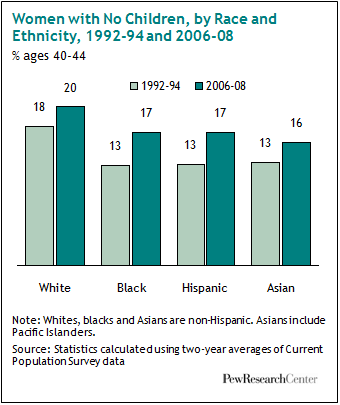
The trend that was beginning to emerge a decade ago has accelerated dramatically. New research from the University of New Hampshire, published in September 2025, found that in 2024 there were 5.7 million more childless women of prime childbearing age than historical fertility patterns would predict. In the past 17 years, the United States has seen 11.8 million fewer births than anticipated.
Among women in their 20s, childlessness rose from 75 percent in 2014 to 85 percent by 2024. A 2025 study published in the Journal of Marriage and Family — drawing on data from 80,000 adults over seven survey waves — found that the percentage of non-parents who plan to have children in the future fell from 78 percent in 2002 to just 59 percent in 2022. Conservatively, one in five American adults is now childfree by choice — and that number is growing.
At the same time, a parallel and equally significant trend is unfolding: women in their 40s are now the fastest-growing group of new mothers in the United States. The average age of first-time motherhood has risen from 19 in 1984 to 30 today — and is even higher in many metropolitan areas. More women than ever are not saying no to children permanently. They are saying: not yet. Not like this. Not until I'm ready. And modern reproductive medicine is increasingly making that possible.
The story of women and motherhood in the 21st century is not a story of abandonment. It is a story of expansion — of more choices, more timelines, more ways to define a meaningful life.
The Culture: Why This Choice Still Requires Explanation
We live in a pronatalist culture. Pronatalism is the set of social, institutional, and political forces that treat having children as not just normal but obligatory — the natural culmination of adulthood, femininity, and a life well-lived. It shows up in family gatherings, in medical consultations, in policy, and in the quiet arithmetic of cultural belonging: you are a full woman when you become a mother.
Research published in 2025 in the journal Psychology of Women Quarterly confirms what many childfree women already know: the stigma is real, measurable, and deeply gendered. Childfree women are rated lower in warmth than childfree men. They are more likely to report feeling excluded from workplace conversations, pressured by family, and labeled as selfish or immature. Attitudes toward childfree people were found to be comparable to attitudes toward other commonly stigmatized groups.
The double standard remains intact. You do not need a reason to have children. You are expected to have a very good one not to. The asymmetry is not accidental — it is structural. And it applies whether you have decided against children permanently, whether you are still deciding, or whether you once said no and changed your mind.
The Right to Change Your Mind: What Cameron Diaz's Story Actually Teaches Us
Cameron Diaz became a touchstone in conversations about childfree choice when she spoke publicly about not wanting children. Her words resonated with millions of women who recognized themselves in her honesty. And then — she changed her mind.
Diaz had her first child, daughter Raddix, in 2019 at age 47, and her second child, son Cardinal, in March 2024 at age 51. She has called motherhood "the best, best, best part of my life." After Raddix's birth, sources reported that Diaz and husband Benji Madden had spent years trying to conceive through IVF, acupuncture, and supplements before turning to surrogacy. Her second child was also welcomed via surrogate.
Her journey is not a cautionary tale about changing your mind. It is not evidence that women who say they don't want children are secretly wrong. It is something more nuanced and more important: it is proof that you are allowed to evolve. That what you know at 35 is not a life sentence. That the choice belongs to you — at every age, in every season.
Diaz herself reflected on this beautifully, noting that the concept of aging and what's possible has changed completely. She was in her late 40s and 50s raising young children — a reality that, just a generation ago, would have been considered biologically impossible for most women. Today, it is increasingly not.
Having Children Later in Life: What Modern Medicine Now Makes Possible
One of the most significant shifts in the story of women and reproductive choice is the rapid expansion of what is medically possible. Women in their 40s and 50s are having children through a range of pathways that simply didn't exist or weren't widely accessible a generation ago.
How does this happen when natural fertility declines significantly after 35? The answer lies in the remarkable advances of reproductive medicine — and in the growing number of women who are proactively preserving their options.
Egg Freezing: Banking Your Options
Egg freezing — once experimental, now mainstream — allows women to preserve younger, higher-quality eggs for use later in life. In 2009, just 475 women froze their eggs in the United States. By 2022, that number had grown to over 29,000 — a 6,000 percent increase. Research from NYU Langone found that women who froze more than 20 mature eggs achieved a 58 percent live birth rate — even among those past their reproductive prime. The length of frozen egg storage did not affect success rates.
Women increasingly view egg freezing not as a last resort but as reproductive insurance — a way of keeping their options open while pursuing education, career, or the right relationship, without the biological clock forcing premature decisions.
IVF with Donor Eggs
For women who did not freeze their eggs earlier, IVF using donor eggs has become the primary pathway to pregnancy in the mid-40s and beyond. Success rates with donor eggs are not significantly affected by the recipient's age — because the quality of the egg determines outcomes, not the age of the woman carrying the pregnancy. With preimplantation genetic screening (PGS), success rates per transfer of a genetically normal embryo are approximately 60 to 65 percent.
Women in their 40s are now the fastest-growing group of new mothers in the United States, and donor-egg IVF is a significant reason why.
Surrogacy
For women who cannot or choose not to carry a pregnancy, surrogacy offers another path. A gestational carrier carries an embryo created through IVF — using either the intended parent's own eggs or donor eggs — to term. Surrogacy is legally and financially complex, with costs ranging from $100,000 to $150,000 or more in the United States, making it a path primarily accessible to those with significant resources. This is an equity issue worth naming: the expansion of reproductive options has not been equally distributed.
Halle Berry had her second child at 47. Janet Jackson became a mother at 50. Naomi Campbell welcomed her first child at 51. Cameron Diaz had her first at 47 and her second at 51. These are not anomalies. They are the visible edge of a much broader demographic reality.
A Note on Access and Equity
It would be incomplete to celebrate the expansion of reproductive options without acknowledging that these options are not equally available to all women. IVF costs $15,000 to $30,000 per cycle. Surrogacy can exceed $150,000. Egg freezing requires forethought, resources, and access to reproductive specialists. While 42 percent of U.S. companies offered fertility benefits in 2024 — up from 30 percent in 2020 — coverage remains inconsistent and often inadequate. The reproductive timeline is expanding for women who can afford it. Advocating for broader access is part of the same conversation about women's autonomy.
The Neuroscience: What the Brain Actually Needs to Thrive
The Parenting Paradox
A growing body of research has documented what researchers call the "parenting paradox" — the gap between the cultural expectation that children bring happiness and the neurological reality of day-to-day parental wellbeing. Studies consistently find that parents report lower moment-to-moment happiness than non-parents, while simultaneously reporting higher meaning and purpose. This is not a contradiction — it is a distinction the brain makes very clearly.
The neuroscience of happiness involves two distinct systems. The hedonic system — driven by dopamine and the brain's reward circuitry — governs moment-to-moment pleasure and satisfaction. The eudaimonic system governs meaning, purpose, and long-term flourishing. Parenting reliably activates the eudaimonic system. It does not reliably increase hedonic wellbeing — and for women who still carry a disproportionate share of caregiving labor, the moment-to-moment experience of parenthood is frequently depleting.
A 2025 Scientific American analysis noted that whether parenting increases or decreases wellbeing depends enormously on context: the equality of caregiving responsibilities, social support structures, and the policy environment. In Norway, where family-friendly policies are robust, women do not report a loss of happiness upon having children. In the United States, they often do.
The Neuroscience of Autonomous Choice
What neuroscience tells us most clearly is this: the single most reliable predictor of wellbeing in relation to parenting is not whether you have children, but whether you felt in control of that decision. Agency is neurologically protective. When our choices align with our authentic sense of self, the nervous system is regulated. When they don't — when we live according to someone else's script — the body pays a cost.
A systematic review found a positive association between childfree life and life satisfaction — not because being childfree is inherently better, but because the adults studied had chosen it freely and consciously. The same would be true of parenthood freely chosen. The brain's prefrontal cortex thrives on values-congruent living. The path matters less than the authenticity of the person walking it.
Meaning, Connection, and the Myth of the Unfulfilled Childfree Woman
One of the most persistent cultural myths is that women without children will face emptiness and regret in later life. Research does not support this. Studies on older childfree adults consistently find high life satisfaction and strong resilience against poor mental health. The strongest correlate of women's happiness is not parenthood but the quality of their intimate relationships and social connection — available along many different paths.
Childfree adults who flourish invest deeply in community, friendship, and personal growth. They direct resources toward experiences rather than obligations. They maintain a strong, coherent sense of personal identity. These are not consolation prizes for a life without children. They are the conditions of a rich human life.
The Psychology: Knowing Yourself Across Time
For most women who choose not to have children, the decision is not impulsive. Research consistently finds that the majority of childfree adults are "early articulators" — people who knew in their teens or twenties that they did not want children. But early articulation is not the only valid path. Some women spend years genuinely ambivalent, holding the question open with honesty and care.
And some women change their minds — in both directions. A woman who was certain she wanted children may find, at 40, that she is at peace without them. A woman who was certain she didn't may find, at 45, that she does — and that modern medicine can help her get there. Both of these are acts of profound self-knowledge. Both deserve to be honored, not mocked.
The psychological work of navigating this decision in a pronatalist culture is, in many ways, the work of secure selfhood: holding your own identity steady in the face of external pressure to be someone else. Knowing what you want. Knowing what you feel. And being honest with yourself when that changes.
This is exactly the kind of work that therapy — attachment-informed, identity-centered, trauma-aware — can support. Not to tell you what to decide, but to help you hear yourself clearly enough to decide for yourself.
A Note on the Full Spectrum of This Choice
The experience of not having children is not uniform. There is a meaningful difference between being childfree by choice and being childless by circumstance — through infertility, the absence of a suitable partner, medical necessity, or economic constraint. Both deserve compassion. Neither deserves stigma. And the psychological work of each is distinct.
There is also the experience of ambivalence — of not knowing, of holding the question, of being neither yes nor no. This is one of the least discussed and most common experiences in reproductive decision-making. Ambivalence is not immaturity. It is honesty. And it deserves space too.
The Most Courageous Thing: Living on Your Own Terms
Whether you have chosen a childfree life, whether you are still deciding, whether you changed your mind at 40 or 50 or are somewhere in the beautiful middle of it all — the most important thing is not the decision itself. It is that the decision is yours.
Made consciously. Made honestly. Made with knowledge of what you actually want, rather than what you've been told you should want. And held with enough flexibility to evolve as you evolve — because you are a living person, not a position paper.
This is the courageous work. Knowing yourself. Staying honest. Giving yourself permission to change. And refusing to accept that your worth is determined by what your body does or doesn't do, or by whose timeline you are or aren't following.
If you are navigating any part of this — the social pressure, the internalized doubt, the grief of one path, the uncertainty of another, or the complex feelings that come with a decision you thought you'd already made — I am here.
I'm April Wright, a licensed psychotherapist in California and Florida. I specialize in attachment, identity, life transitions, and the courageous work of knowing yourself — and trusting what you know. I use EMDR, somatic therapy, and attachment-informed approaches to help you navigate the choices that matter most.
You deserve to make this decision from a place of clarity, not pressure. Let's find that clarity together.
📅 Book a Consultation: thecourageousself.com
📧 Reach Out Directly: april@thecourageousself.com
Your timeline. Your body. Your choice. Always.