November 4, 2025
The Science of Kindness: How Small Acts Improve Mental Health, Reduce Stress, and Strengthen Connection

Mind–Body Wellness
1 minutes
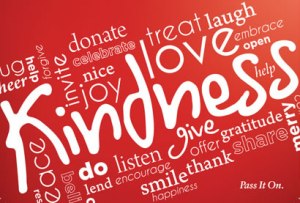
Kindness is often seen as something soft. Optional. A nice gesture if you have the time.
But psychologically—and even neurologically—kindness is anything but small.
Kindness is the intentional act of extending care, compassion, and consideration toward others. And research continues to show that these seemingly simple behaviors have measurable effects on mental health, relationships, and even physical well-being.
More importantly:
kindness is contagious.
One act leads to another.
One moment shifts a mood.
One gesture can quietly alter the trajectory of someone’s day—or life.
I witnessed this truth through a close friend.
He developed a relationship with the owners of a dry cleaning shop in his building. Over time, he learned their son had moved back to India, and they hadn’t seen him in years due to the cost of travel.
Weeks later, a package arrived at their door.
Inside were two round-trip airline tickets—unnamed and undated.
No announcement. No need for recognition. Just a deeply human act of generosity.
They were overwhelmed with gratitude. Reunited with their son. Changed.
And even though my friend is no longer alive, that moment lives on—
a quiet legacy of love, carried forward through memory and impact.
That’s the thing about kindness.
It doesn’t end with the act.
It echoes.
Modern research in positive psychology and neuroscience has expanded what we know about kindness:
Studies by researchers like Sonja Lyubomirsky and Kristin Layous show that engaging in acts of kindness:
Neuroscience research also shows that acts of kindness activate the brain’s reward system, increasing dopamine and oxytocin—chemicals associated with pleasure, bonding, and trust.
This is sometimes referred to as the “helper’s high.”
In other words:
being kind doesn’t just help others—it changes you.
Behavioral science confirms what you intuitively already know:
Kindness spreads.
When someone experiences an act of generosity, they are more likely to:
Even something as simple as a smile can create a ripple effect.
Research on emotional contagion shows that facial expressions are mirrored in the brain—meaning your smile can quite literally shift another person’s emotional state.
So yes…
your smile is doing more work than you think.
A landmark study published in PLoS ONE (Layous et al., 2012) found that preadolescents who performed acts of kindness experienced:
More recent educational and developmental research continues to show that kindness-based interventions:
Teaching kindness isn’t just about behavior.
It’s about shaping identity.
In a culture that often rewards speed, productivity, and self-focus, kindness can feel like it’s taking a back seat.
But moments of collective kindness still rise when we need them most.
Following the tragedy of the Sandy Hook Elementary School shooting, journalist Ann Curry encouraged people to commit to acts of kindness in honor of those lost.
What began as a simple idea became a widespread movement.
People didn’t just respond.
They amplified it.
Because at our core, we are wired for connection—and kindness is one of the most direct paths back to it.
Kindness is not just a moral value—it’s a psychological advantage:
And perhaps most simply:
it feels good to be kind.
Kindness doesn’t require wealth, status, or perfect circumstances.
It begins with one choice.
One moment of awareness.
One decision to respond with care instead of indifference.
Like a ripple in water, it expands outward—often in ways you will never fully see.
But that doesn’t make it small.
It makes it powerful.
If you’re waiting for the “right moment” to be kind—this is it.
Not something grand. Not something performative.
Just one intentional act today:
And then tomorrow… do it again.
Because the world doesn’t change all at once.
It changes through people willing to act—quietly, consistently, and courageously.
Be the one who starts the ripple.
References
Kristin Layous, S. Katherine Nelson, Eva Oberle, Kimberly A. Schonert-Reichl, Sonja Lyubomirsky. Kindness Counts: Prompting Prosocial Behavior in Preadolescents Boosts Peer Acceptance and Well-Being. PLoS ONE, 2012; 7 (12): e51380 DOI: 10.1371/journal.pone.0051380
https://www.randomactsofkindness.org