April 6, 2026
When Your Parent Can't Change: Accepting What Is, Protecting What Matters, and Finding Your People

Relationships & Attachment
8 min

There is a particular kind of exhaustion that comes from waiting for someone to become different.
You’ve explained your pain—clearly, patiently, sometimes not so patiently. You’ve given them opportunities to respond differently. And still, the same patterns repeat: defensiveness, redirection, an inability to truly hear you.
And part of you keeps hoping: maybe this time will be different.
But it isn’t.
Over time, the disappointment stops being about a single conversation and becomes something much heavier—years of not being met in the way you needed.
This article is for the moment that realization lands:
My parent is not going to change.
Not because you didn’t try hard enough—but because they cannot, or will not.
Sometimes a parent responds to your vulnerability not with presence, but with advice. With redirection. With their own narrative about what your problem really is—and what you should do about it.
It sounds like love on the surface. There may even be “I love you” at the end. But underneath, what you feel is something else entirely: the familiar ache of not being heard.
Of being told what is wrong with you instead of being witnessed in your pain. Of sharing something deeply personal and receiving, in return, a verdict.
This is one of the most confusing wounds in these relationships—when a parent’s response to your hurt is to turn it back toward you as something to fix. When your anger becomes the issue instead of what caused it. When your honesty becomes evidence that you need help, rather than an invitation to connect.
Many adult children carry this quiet confusion for years:
They say they love me. They’re trying to help. So why do I feel more alone after talking to them?
The answer is painful, but clarifying:
There is a difference between words that sound like love and presence that actually feels like love.
Your parent may love you genuinely—and still be fundamentally unable to show up in the way you need. Those two things can exist at the same time.
It’s important to hold onto this truth: people can change. Growth is real. The capacity to develop awareness and do things differently exists in all of us.
But change requires willingness.
It requires a person to look honestly at their patterns, to acknowledge harm, and to do the uncomfortable work of becoming different. Not everyone is willing to do that.
Some parents cannot change because they lack the tools—unprocessed trauma, emotional limitations, or patterns so deeply ingrained they cannot see them.
Others could change, but won’t—because doing so would require them to question their identity, admit fault, or release a narrative they’ve spent a lifetime protecting.
Whether they can’t or won’t—the outcome for you is the same.
And the moment you truly accept that—the moment you see that their limitation is not your failure—is the moment something begins to shift.
Accepting that your parent will not change does not mean you approve of how they’ve treated you.
It does not mean you stop having feelings.
It does not mean you owe them closeness.
It does not mean you minimize what hurt.
It means something both simpler and harder:
You see them clearly—without the filter of hope—and choose how to move forward based on what is real.
Your parent may love you.
They may have done their best.
They may be a good person in many ways.
And they may also be fundamentally limited in their ability to:
Both things can be true.
The parent you have is this person—not the version you keep hoping will emerge.
Accepting that means you stop rehearsing conversations in your head. You stop searching for the perfect way to say it.
Because the words were never the problem—their capacity to receive them is.
Every person moves through life with their own narrative—their own interpretation of the past, their own version of events.
Your parent has theirs. You have yours.
And no matter how clearly you explain your experience, you may never get them to see it the way you do. They are operating from their own wounds, defenses, and need to maintain a version of reality that feels tolerable to them.
This is not unique to your relationship—it is part of being human.
But in this dynamic, it matters deeply.
Because the resolution you’ve been waiting for—the moment they finally understand, acknowledge, validate—may never come.
And waiting for that moment is quietly costing you your life.
The shift is this:
You stop needing their narrative to change in order for yours to be true.
Your experience is valid whether or not they acknowledge it.
Your pain is real whether or not they apologize.
And learning to trust that truth—without their agreement—is part of the healing.
There is a kind of wisdom that only comes after enough disappointment.
It’s the moment you recognize the pattern—and choose not to participate in it anymore.
Not out of bitterness. Not out of defeat.
But out of clarity.
This is choosing to stop knocking on locked doors—and turning toward the ones that open.
It means protecting your vulnerability.
Sharing less with someone who has shown they cannot hold it safely.
It means building your life around people who can meet you.
It means accepting that you can have depth, connection, and emotional safety in some relationships—even if you cannot have it with this parent.
That is not a tragedy.
That is reality.
When you stop waiting for your parent to change, something unexpected happens:
You get your energy back.
The energy that was tied up in hope, in trying, in explaining, in recovering from the same disappointment over and over again.
And in that space, you begin to notice something else:
The people who do show up.
The friend who listens without fixing.
The partner who stays present with your pain.
The therapist who understands that being heard is the point.
The people who don’t need to be convinced to care.
These are your people.
Not perfect people—but people with the capacity to:
Be intentional here.
Build your life around what is reciprocal—not what is hoped for.
Your parent may remain in your life. But they do not have to remain at the center of it.
That place belongs to the people who choose you back.
Healing from this kind of pain is not only about understanding what went wrong.
It is also about turning toward what is good.
The relationships that nourish you.
The work that gives you purpose.
The quiet moments that feel steady and real.
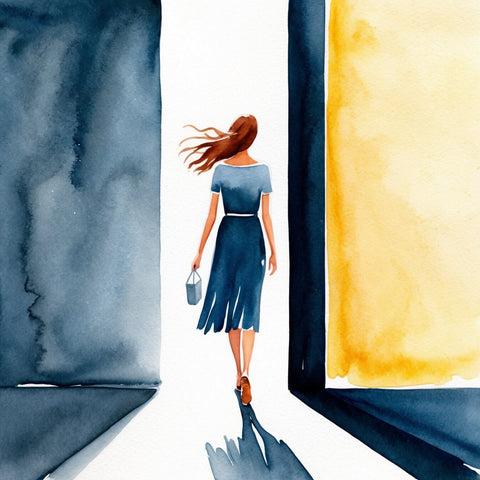
You are allowed to follow what feels like sunlight.
You are allowed to build a life so full of meaning and connection that what your parent cannot give you stops being the center of your story.
Your parent may never become who you needed them to be.
But you can become someone who no longer waits for them to.
Someone who trusts their own experience.
Someone who chooses relationships that are mutual and safe.
And over time, that quiet shift changes everything.
If this resonated, it may be time to stop circling the same painful pattern—and begin building something different.
At The Courageous Self, we take a whole-person approach to healing—helping you reconnect with your inner voice, set grounded boundaries, and create relationships that feel mutual, steady, and real.
This work takes courage.
And you don’t have to do it alone.
Reach out when you’re ready.