September 2, 2026
The Moment You Realize You've Been Abandoning Yourself | The Courageous Self

Relationships & Attachment
8 minutes

There's a moment a lot of us can point to. Maybe it happens at a stoplight, or in the shower, or in the quiet after everyone else has gone to bed. You're replaying a conversation from earlier — the one where you said “it's fine” when it wasn't, or laughed at something that didn't feel funny, or agreed to something you didn't want — and a question rises up before you can stop it: When did I stop asking myself what I needed?
That question is usually the beginning of something, not the end of it. It's the moment you realize you've been showing up for everyone except yourself.
Self-abandonment doesn't announce itself. It rarely looks like a dramatic rupture. Far more often, it looks like the small, automatic things:
Saying yes before you've checked in with whether you mean it. Swallowing what you wanted to say because the moment felt too fragile to risk it. Feeling something and immediately talking yourself out of it. Making yourself a little smaller so the room stays comfortable. Going quiet to keep the peace. Asking what does everyone else need from me long before you get around to asking what you need.
Jordan once described it to me this way: they could feel the different rooms of their life instantly — what was needed here, and here, and here — long before they could feel what was happening in themselves at all.
None of this looks like crisis. That's exactly why it's so easy to miss — and why so many people don't recognize this pattern until years into it, once it's been rehearsed so many times it feels like personality instead of a strategy.
I want to be careful here, because it would be easy to hear all of this and think the answer is to stop compromising, stop caregiving, stop being flexible for the people you love. That's not it.
Self-abandonment isn't the same thing as kindness. It isn't the same as compromise, or caregiving, or being a good partner, friend, or parent. Relationships — real ones — require flexibility. They require give. The question was never did you bend. The question is did you disappear while you were bending.
There's a version of showing up for someone that still has you in it. And there's a version that quietly erases you, one accommodation at a time. Those two things can look identical from the outside. They feel completely different from the inside.
Nobody arrives at self-abandonment by accident, and nobody arrives at it because something is wrong with them. Human beings are extraordinarily good at reading the emotional weather of the people around them — noticing what settles a room and what unsettles it, what earns warmth and what earns distance — and then adjusting themselves accordingly. That's not a flaw in the system. That is the system. It's one of the most reliable ways people learn to stay close to others, and staying close to others has always mattered to our survival, in the most literal sense.
So we adapt. We get quieter where quiet was rewarded. We get more agreeable where agreement kept things calm. We learn, often without ever deciding to, that the fastest way to hold onto connection is to hold less and less onto ourselves. It's a strategy. An understandable one — one that worked well enough, for long enough, to help you stay connected, stay functional, and keep going.
The trouble isn't that the strategy was wrong. The trouble is that most of us never got the memo that it was time to update it.
Wait. I've been doing this everywhere.
The realization rarely stays contained. Once you can name the pattern in one place, you start noticing it everywhere.
In romantic relationships, where you've learned to read a partner's mood before you've registered your own. In family, where old roles reassert themselves the moment you walk through the door, no matter how much you've grown since you left it. In friendships, where you've become the one who holds everyone else's feelings and rarely offers your own. At work, where disagreement feels riskier than staying quiet, even when you're right. In intimacy and sexuality, where wanting something — and saying so — can feel more exposing than almost anything else. In conflict, where keeping the peace has quietly become more important than telling the truth. And even in your relationship with yourself, where you've gotten so used to managing everyone else's experience that you've lost the habit of checking in on your own.
It's not one relationship that needs fixing. It's a pattern that's been running underneath most of them.
Here's where it would be easy to take this somewhere it doesn't need to go — toward independence, toward self-sufficiency, toward some version of healing that means needing people less.
The goal was never to stop needing connection, or to become so self-contained that no one can reach you. The real question — the one this work is about — is much harder and much more honest:
How do I stay connected to myself while remaining connected to you?
Not instead of you. Alongside you. That's the whole shift.
You don't return to yourself all at once, and you don't return to yourself through willpower. It starts with something much smaller and much more available: noticing that you've left.
That noticing — the pause where you catch yourself mid-accommodation and think, wait, what do I feel right now — is the first move in a much longer process of learning to sense what's happening inside you, before you explain it, defend it, or fix it. We'll spend real time on that process in the weeks ahead. For now, what matters is just this: the return begins the moment you notice the absence. Everything after that is practice.
Jordan told me, months into this work, that the moment finally came in a parking lot — nothing dramatic, just an ordinary Tuesday, sitting in the car after work, running back through everything they'd agreed to that day without once asking whether they'd wanted to. That's usually how it arrives. Small, and almost missable.
And this is worth saying plainly, because it changes what the work feels like: coming back to yourself isn't only about relief from old pain. It's also how you recover the parts of yourself that self-abandonment quietly starved — aliveness, spontaneity, play, desire, creativity, joy. Those aren't the reward at the end of healing. They're often the first sign that it's working. People who reconnect with themselves don't just suffer less. They laugh more easily. They want things again. They take up space without apologizing for it.
That's also why this was never going to be a matter of learning one more technique, or picking up a new skill and applying it correctly. Healing isn't a checklist. It's a different way of relating to yourself — the same way you'd slowly rebuild trust and closeness with anyone you'd stopped paying attention to. It happens in the noticing, the returning, the noticing again.
Here's the part I most want you to hear: the person who has been abandoning you all this time and the person who is capable of coming home to you are not two different people. They're the same person. The one who learned, early and well, how to disappear a little to stay connected — and the one who is now, slowly, learning something different.
You adapted. It made sense. It kept you close to the people who mattered.
You may be ready for something different now — not because you were wrong, but because you no longer have to choose between being loved and being yourself.
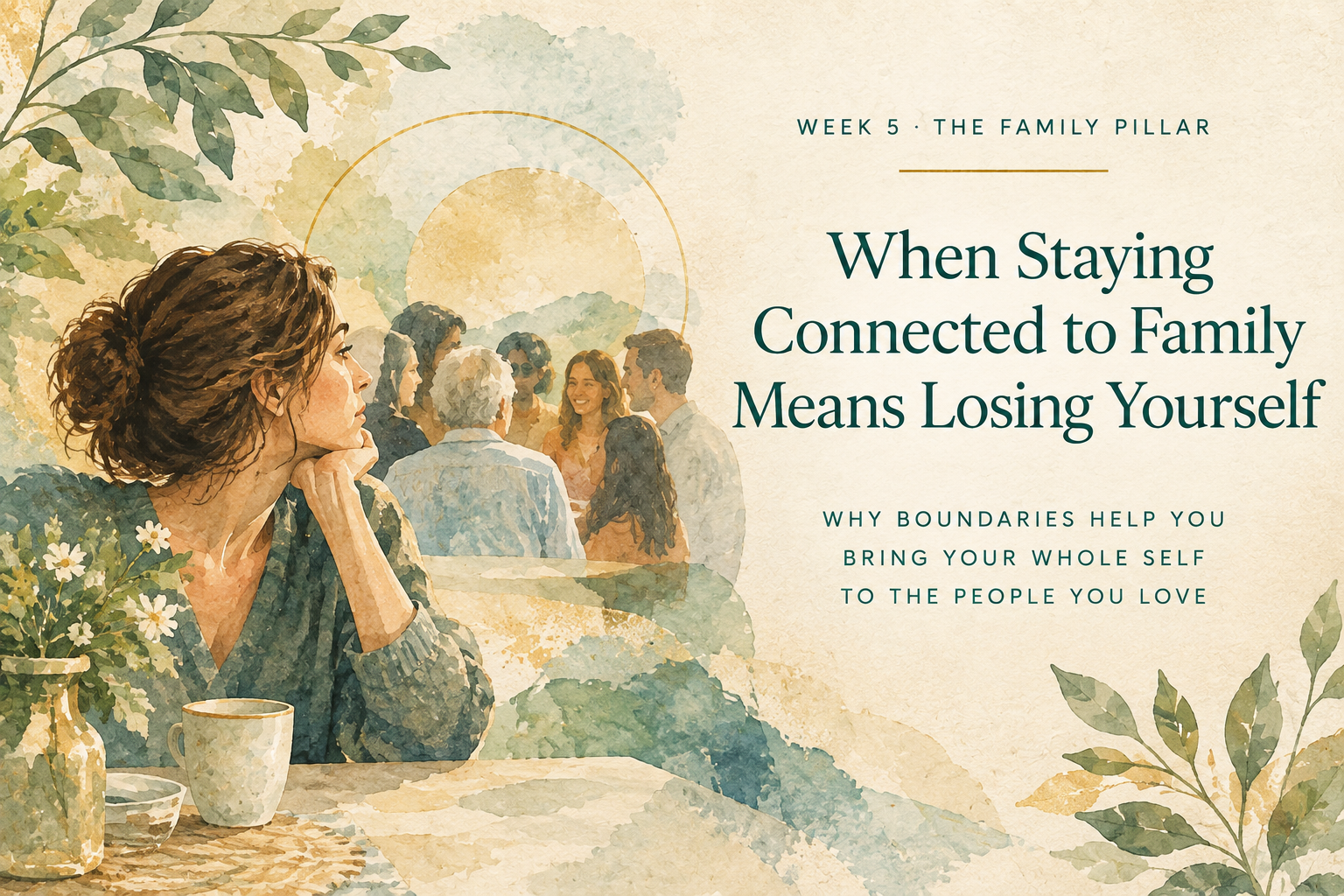
You don't have to lose yourself in order to be connected to someone else.
Jordan is a composite, illustrative character created to bring the themes of this series to life.