October 27, 2026
When Love Requires You to Leave Yourself Behind

Relationships & Attachment
6 minutes
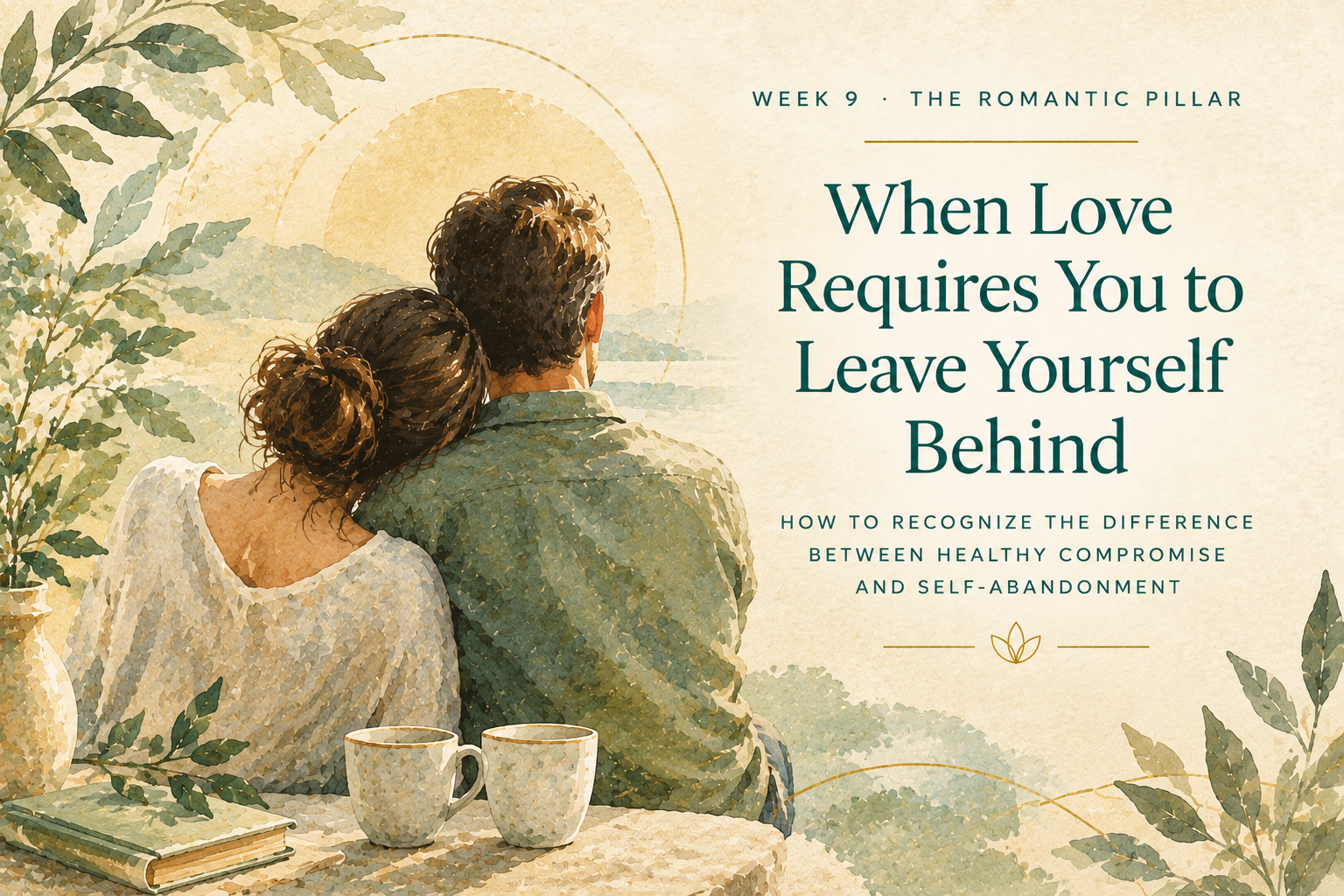
We've talked about this pattern before in the context of family — the way staying connected to the people who raised you can quietly require you to disappear. A man named David found the same pattern waiting for him in his marriage, just wearing different clothes. Every relationship worth keeping asks something real of you, and giving something up for someone you love is often exactly what commitment looks like. The question worth asking isn't whether you're giving something up. It's whether you're choosing to — and David's marriage held clear examples of both.
When David and his wife decided where to live, they wanted different things — he'd have stayed near his own college friends; she wanted to be closer to her aging parents. They talked it through more than once, weighed what each of them was actually giving up, and chose her hometown together. David still remembers exactly what he wanted that year. He can name it without any bitterness, because choosing, consciously, to set it down because the relationship mattered more was what real commitment looked like for him — a good-faith trade he made with his eyes open.
That's the marker of healthy compromise. He knew what he wanted. He could still name it, years later, without an apology attached — only a choice he'd made on purpose.
Self-abandonment, the pattern we opened this series with in Week 1, showed up in David's marriage too, just far more quietly. He used to play guitar most Friday nights with a small group of friends. At first he'd skip a session here and there when it caused friction at home. Then he stopped mentioning it at all. By the third year, when a friend asked if he still played, David realized he'd genuinely forgotten he used to want to. That's an unconscious drift — incremental enough that he couldn't point to when it started, quiet enough that by the time he noticed, he'd lost track of what he wanted in the first place.
This is the same distinction we drew in Week 2 between chasing and receiving: reaching toward someone can be a genuine choice, made from wholeness, or it can be a loss of self. For David, choosing the move was the first. Quietly giving up the guitar, and then forgetting he'd given up anything at all, was the second.
In the SEEN framework, a healthy relationship is one where two people continually, openly negotiate three questions, out loud or at least honestly with themselves: What matters to me here? What matters to you here? And what are we each willing to adjust, because this relationship is something we both want to protect? When David finally brought the guitar back up with his wife — years later, almost as an experiment — he realized he'd never actually asked her the first question. He'd assumed the answer and quietly acted on the assumption instead.
That negotiation is an ongoing practice — the same way sensing, asking, and setting a boundary are practices — something you return to again and again, as the relationship and the two people in it keep changing.
How much give is enough is a matter of attunement rather than formula: a regular, honest check-in with yourself about whether this still feels like a choice. David's version of that check-in, now, is simple: he asks himself once in a while whether he can still name what he wants, even the things he isn't currently getting. Am I setting something down because I've weighed it and it matters less to me than this relationship does — or because I've simply stopped believing I'm allowed to want it at all? This is attunement, not score-keeping — a felt sense of balance, checked regularly, rather than a tally of who bent further this month.
That felt sense, checked regularly rather than diagnosed once and forgotten, is usually the most honest guide available. It's also what tips the scale back when it's needed — a quiet return to noticing, before the gap between what you want and what you're living has time to grow wide. David plays guitar most Fridays again. His marriage, if anything, held it better than his silence did.
A relationship can ask a great deal of you and remain entirely healthy, as long as you're the one still choosing it, trade by trade. A relationship can also ask very little, on paper, and still quietly cost you yourself, once the giving has stopped being a choice. The real measure was always whether you're still in there, making it.